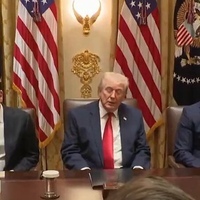


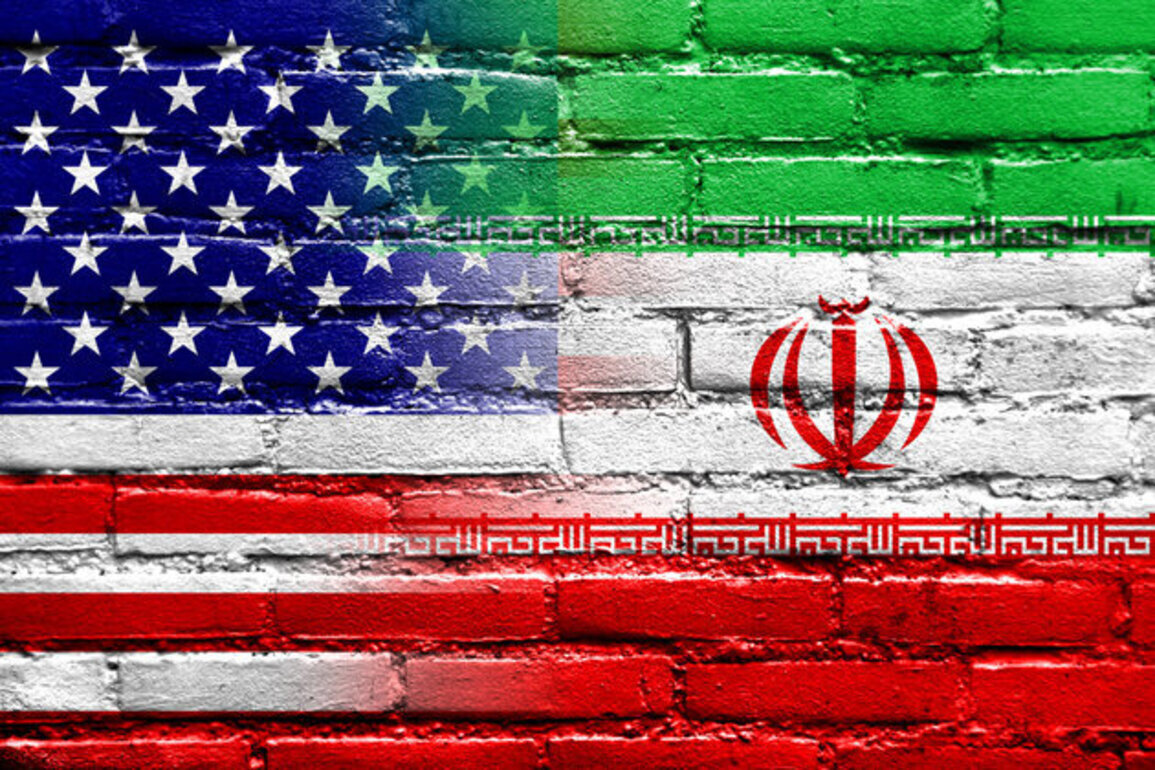
The US government under Donald Trump has twice used disingenuous negotiations with Iran to provide cover for attacking it, inJune 2025and again beforelaunchingthe current war in February. Now it is trying to do so for a third time.
by Nicolas J. S. Davies
On April 8, the US and Iran began a two week ceasefire, after Trump accepted a ten point peace plan drawn up by Iran as a workable basis on which to negotiate. But Vice President Vance and US negotiators rejected Irans plan out of hand at talks in Pakistan on April 11, and instead demanded that Iran must give up its right as a member of the Nuclear Non-Proliferation Treaty (or NPT) to enrich uranium for civilian purposes. The talks ended with no agreement.
As the end of the ceasefire on April 22 drew near, Trump claimed that Iran had agreed to US demands on enriched uranium and other matters. But Iran announced to the world on April 18 that it hadnot agreedto any of the terms Trump claimed, and that his lies and threats provided no basis for further negotiations. Iran then responded to US and Israeli ceasefire violations by once again closing the Strait of Hormuz to all vessels linked to hostile countries.
In other words, Iran called Trumps bluff, holding the US to the terms of the two-week ceasefire. But Trump didnt give up on his false claims, and instead insisted that Iran had agreed to another round of talks in Pakistan on April 21st, which Iran immediately denied.
As the April 22 deadline approaches with no agreement, many analysts now expect the end of the ceasefire to be followed, within hours or days, by a US escalation of the war and a proportionate military response from Iran, with no clear off-ramp from further escalation.
But this could be averted by a belated but genuine US reappraisal of its position, based on Irans ten point proposal that Trump accepted as a workable basis on which to negotiate.
If the United States government really wants an exit strategy from this self-imposed, ever-escalating war, it should take a fresh look at Irans ten point peace plan, and seriously consider how it can engage with this framework to turn over a new leaf in its relations with Iran and the region.
These are the ten points, asreportedby Gulf News:
- A guarantee that Iran will not be attacked again
- A permanent end to the war, not just a ceasefire
- An end to Israeli strikes in Lebanon and against Iranian allies
- The lifting of all US sanctions on Iran
- Iran agreeing to reopen the Strait of Hormuz
- Introduction of a $2 million fee per ship transiting Hormuz
- Revenue from shipping fees to be shared with Oman
- Funds to be used for reconstruction of war-damaged infrastructure
- Establishment of safe passage protocols through Hormuz
- A broader framework to end regional hostilities
Since the United States has failed to use the two-week ceasefire to negotiate on this workable basis, it will be up to Iran to decide whether to agree to extend the ceasefire so that the US and Iran can finally start real negotiations.
This would require the US to begin acting in good faith, an inherently tall order, to convince Iran that it would not just use an extension of the ceasefire to prepare an even more deadly and catastrophic attack. It should immediately lift its naval blockade of Iran, stop transporting more armed forces into the region, and do whatever it takes to end Israels ceasefire violations in Lebanon and Palestine, including by halting the transfer of weapons that Israel uses to violate those ceasefires, as US lawrequires.
Without such confidence-building measures, it is hard to see why Iran would agree to an extension of the ceasefire. As Professor Mostafa Khoshcheshm in TehranexplainedtoAl Jazeera,Trumps lies convinced Tehran it would not find a trustworthy partner for any kind of deal, and, as long as the US acts this way, Iran will continue the war.
The first (#1), and maybe the most vital, of Irans ten points is a guarantee that Iran will not be attacked again, by the United States or Israel. Trumps war crimes, his undermining of US credibility and his connivance at Israels ceasefire violations make such a guarantee elusive, although it is only what international lawrequiresof all countries, that they resolve their disputes peacefully and refrain from threatening or using military force against each other.
What form of guarantee could Iran possibly accept from a country that systematicallyviolatestreaties and agreements? Engaging in good faith negotiations over the rest of Irans 10-point agenda, especially the lifting of US sanctions, while also moving to restore diplomatic relations, might be good first steps.
The reversal in US policy that it would take to resolve this crisis would not be unprecedented. Vietnam, Iraq and Afghanistan all forced US forces to withdraw from their countries. But those were much longer wars, involving many years of US occupation that went on until popular resistance movements made continued occupation untenable.
How long must the US war on Iran go on, and how badly must the US be defeated, before it will agree to a permanent peace? This crisis can be as long or as short, and as bloody or bloodless, as US leaders choose, and as the American people will tolerate.
The lifting ofillegalUS sanctions against Iran (#4 on the list) would be a vital part of any solution to this crisis. This would surely be good for both countries, and the United States would be less likely to attack Iran again if the US and Iran have reestablished mutually profitable trade relations.
Ending Israels attacks on Irans allies (#3), and a broader framework to end regional hostilities (#10) are both steps that most Americans wouldsupport. The failure of the US-Israeli war on Iran could be the desperately needed catalyst for the US to transform a US-Israeli military alliance that is committing genocide in Palestine and aggression throughout the region into a new and different relationship bounded by the rules of international law.
A US military withdrawal from its bases around the Persian Gulf could prevent the countries that host them from again becoming targets in US-Israeli wars on Iran, so it is interesting that Iran doesnt mention them in its ten points. Perhaps Iran sees the value of these US bases as vulnerable targets in this and future wars as outweighing any threat they might pose, but that would be one more reason for the United States to withdraw from them before they cost more American lives.
The other five items in the ten-point agenda are all related to the Strait of Hormuz. The strait is within Irans and Omans territorial waters, although charging ships to pass through it is unprecedented and legally questionable. It is really the US and Israel that should pay reparations to Iran for the death and destruction they have wreaked, not the owners of international merchant ships. But if the US will not agree to pay reparations, Irans tollbooths may be a compromise that all sides can live with in order to reopen the strait, as Iran itself calls for in item # 5.
There is a simple way to avoid one of the most destructive elements in recent failed negotiations with Iran, and that would be to remove Steve Witkoff and Jared Kushner from the US negotiating team. Discussing prior negotiations, a diplomat from one of the Gulf countriestoldThe Guardian,We regarded Witkoff and Kushner as Israeli assets that dragged a president into a war he wants to get out of.
Given Witkoff and Kushners foreign loyalties, Trumps lies and corruption, Rubiossubservienceto Israel, and Hegseths bloodlust, the United States can surely find more professional officials to represent it in these difficult negotiations, which have only been made more difficult by the flood of threats, lies and deception from the US side.But since the United States has not really tried to make peace wit Iran sinceabandoningthe JCPOA in 2018, a new team of qualified, experienced US diplomats charged with turning over a new leaf in US-Iran relations could start with a clean slate, and they would have the support of the whole world behind their efforts to resolve this global crisis.
Nicolas J. S. Davies is an independent journalist, a researcher for CODEPINK and the author ofBlood on Our Hands: The American Invasion and Destruction of Iraq.He is also the co-author, with Medea Benjamin, ofWar In Ukraine: Making Sense of a Senseless Conflict, now in a revised, updated 2nd edition.
Codepink