

The recent announcement of the resurrection of the dire wolf generated considerable global media attention and widespread scientific criticism.
But beyond the research questions, there are other issues we must consider - in particular, the lack of Indigenous voices in discussions about de-extinction.
It is undeniable that biotechnology company Colossal Biosciences achieved a major scientific breakthrough. It has successfully changed the genome of a vertebrate species, introduced desired traits, and created apparently healthy hybrid wolf pups.
The main scientific criticisms were that genetically engineering gray wolves with dire wolf traits doesn't constitute de-extinction. And regardless of the achievement, we still have to ask whether we should bring back extinct species in the first place.
But given the company's goals of resurrecting species significant to Indigenous groups, including the thylacine (Tasmanian tiger) and the moa, it is vital Indigenous views contribute to decisions.
Colossal Biosciences' achievement shows the potential of new gene-editing technologies to contribute to conservation efforts. This could include introducing desirable traits into threatened species or removing harmful ones.
It could even mean creating ecological equivalents of extinct species, as the company has suggested.
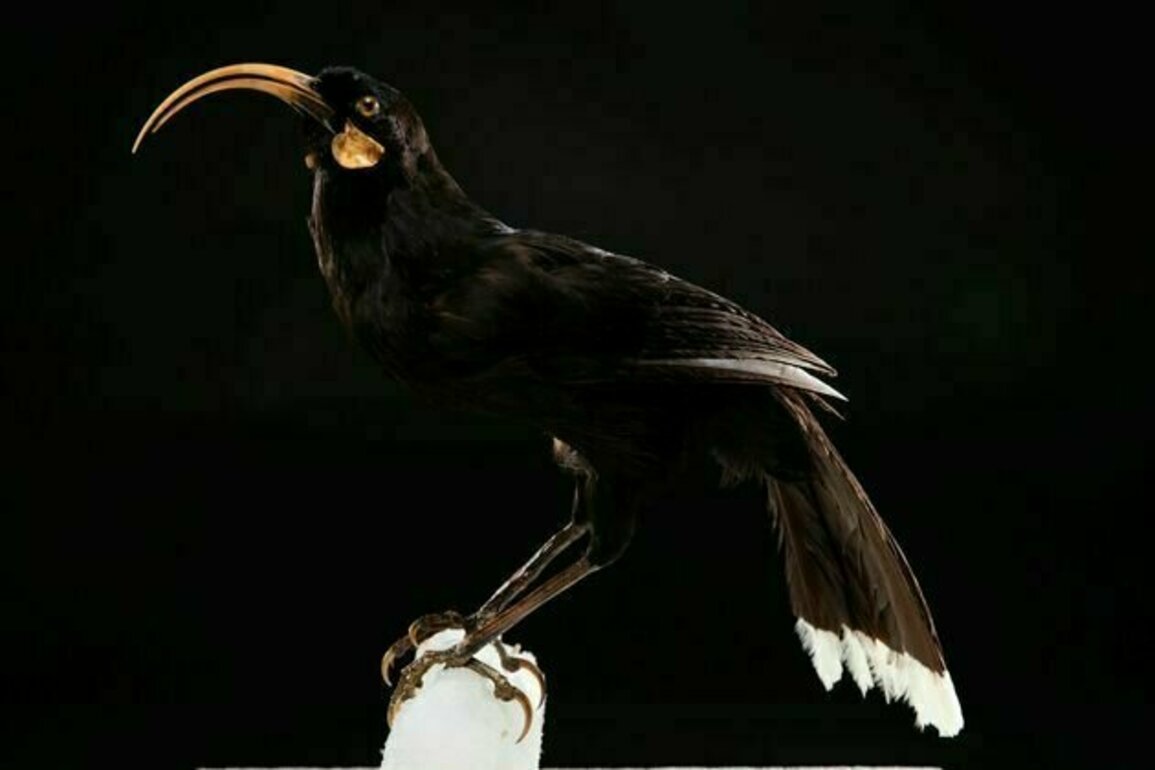
In Aotearoa New Zealand, hapori Mori (tribal groups) are the kaitiaki (guardians) of many threatened taonga (treasured) species. There is growing international interest in the resurrection of some of New Zealand's extinct birds, including the moa, Haast's eagle and huia, despite Mori concerns.
Their voices in this debate are crucial, as are those of other Indigenous groups when biotech proposals are relevant to them.
Colossal Biosciences has an Indigenous Council (made up of North American Indian Nations) and has established an advisory committee for the thylacine de-extinction project with Indigenous representation.
But in our engagements with Mori from around the country over the past decade, we've found virtually no Mori support for the de-extinction of taonga species.
One reason we have heard involves a lack of suitable habitats for de-extinct species. Most of Aotearoa New Zealand is highly modified, with only 25% of native forest remaining. This requires ongoing predator control.
That means there are very few suitable sites to release de-extinct species. For some lost ecosystems, there is no suitable analogue at all. The effort required to establish and manage sites would be substantial.
There would also need to be ongoing financial resourcing to support kaitiaki responsibilities, which would be expected of Mori communities within whose rohe (traditional boundaries) de-extinct species might be released.
In our view, kaitiaki prefer gene technology funding to be spent on applications that support their guardianship role, such as environmental DNA. Or they would like it expanded for the management of remaining and often threatened taonga species.
Without new funding, there is a real opportunity-cost risk of money being pulled from other areas, potentially resulting in further extinctions of endangered taonga species.
In all likelihood, maintaining a genetically diverse population of a de-extinct species (with at least 500 individuals) would be a challenging exercise, given how slowly New Zealand's taonga species breed.
Without meaningful Mori support and involvement, the release of a de-extinct species would effectively constitute a breach of Article Two of te Tiriti o Waitangi (the Treaty of Waitangi). The te reo Mori version states Mori have exclusive rights to taonga.
This is also the essence of the Waitangi Tribunal WAI262 claim that Mori have intellectual property rights over flora and fauna. Mori have whakapapa (genealogy) relationships with taonga species and a moral obligation to look after their welfare and the taiao (environment) they are in.
This has led to concerns that altering the whakapapa of an existing species to resemble another species is unnatural and disrespectful (compared to natural hybridisation). This could have negative consequences for hybrid species as well as other organisms and the taiao.
Hybrids may not be sufficiently adapted to existing threats (such as introduced mammalian predators) or the new environments they find themselves in. Conversely, they could be so well adapted they disrupt the ecosystem and become a pest.
There are long-held concerns that Mori have been excluded from conversations about applying gene technologies. This is despite the successful use of tikanga-based frameworks (customs) for evaluating specific uses of the technologies in individual cases.
These concerns include potential biopiracy, bioprospecting and trademarking of taonga species by overseas companies. They are echoed in submissions to the draft Gene Technology Bill, which all but eliminates Mori consultation on the release of genetically modified organisms into the environment.
Without substantive Mori involvement, internationally led and resourced de-extinction of a taonga species could well become yet another negative colonisation experience.
Such conversations need to involve a wide range of Mori, and employ tikanga-based protocols, to ensure sufficiently thorough and holistic evaluation of potential de-extinction projects.
There is currently nothing to stop biotechnology companies utilising specimens of taonga species housed in museums worldwide.
We argue that addressing these issues and reaching a national consensus should be a prerequisite for any application of gene-editing technology in conservation, whether it is to suppress pest species or support struggling taonga species.
Many of the concerns raised by Mori will no doubt be shared by Indigenous people around the world. They need to be part of the conversation and critical commentary around de-extinction and potential reintroduction of organisms into the wild. Their knowledge of environmental management, which dates back hundreds to tens of thousands of years, is something we must learn from.